
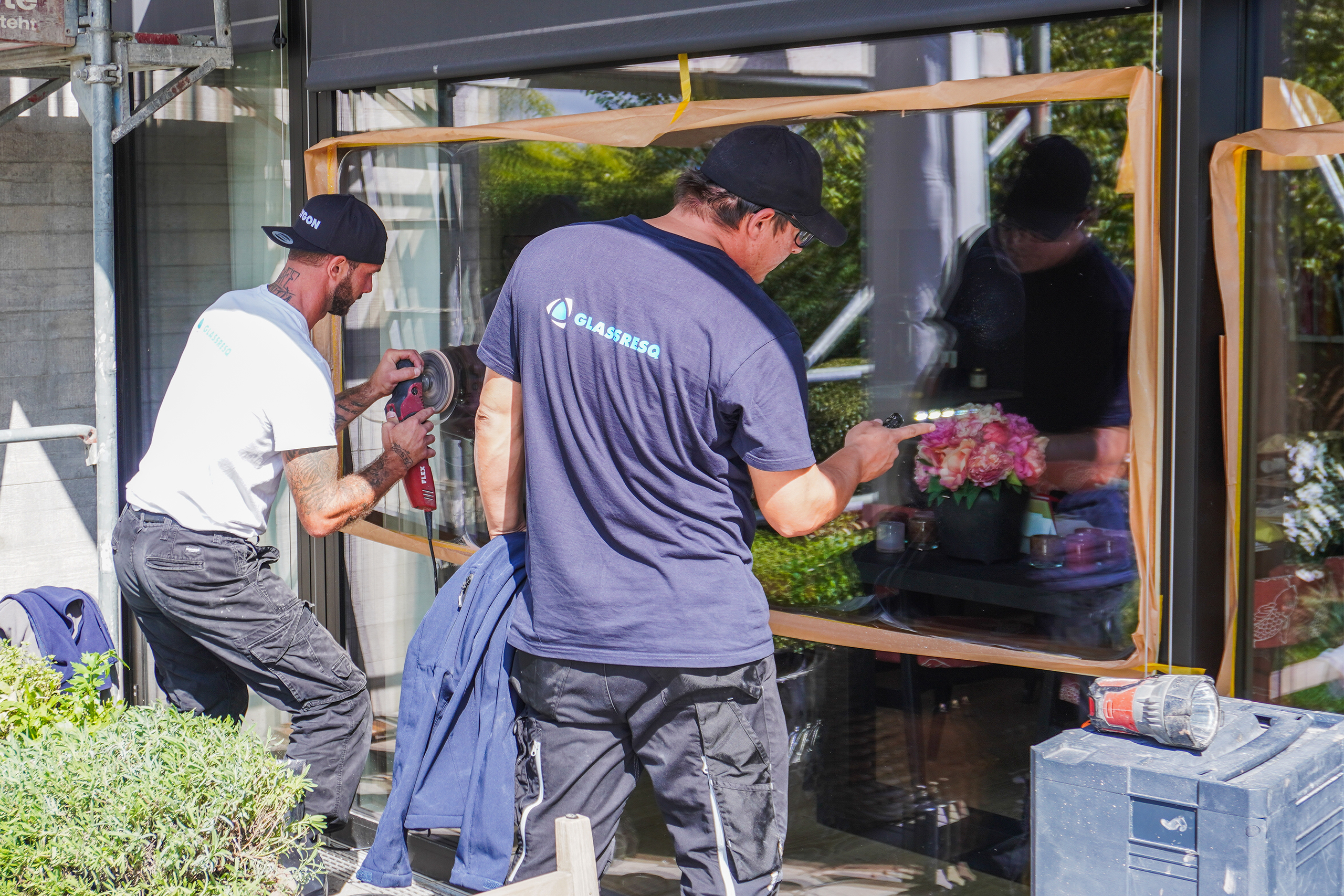
Technical article by Dominic Duer, CEO of GLASSRESQ AG
Glass Scratches at Project Completion: An Underestimated Risk
In December, construction projects in Switzerland come under massive pressure. Project closures, final invoices, holidays, vacancy costs, the onset of winter, and lack of time all converge. It is precisely during this phase that glass scratches often appear, which had been hidden for months.
Windows, façade glazing, and fall protection systems show fine scratches after protective films, dust, or labels are removed. For general contractors, site managers, and clients, this means that a seemingly minor defect can suddenly block the project.
In most cases, glass scratches are considered a defect under SIA Standard 118. Failing to react in time can result in costly change orders, delays in acceptance, strained client relationships, and legal disputes during the warranty period.
Practical rules for surface assessment: Quick visual inspection
Why Glass Scratches Are Legally Relevant
According to current construction practice, visible scratches on glass surfaces constitute an aesthetic defect. This represents a clear deviation from the work agreed upon in the contract.
Visible glass defects must either be corrected before acceptance or recorded in the acceptance protocol. If this does not happen, it may lead to reserves, discussions with investors, buyers, or authorities, and, in the worst case, legal proceedings.
These damages often result from improper cleaning, unprotected construction processes, or poor coordination between trades. Typical causes include incorrect blade cleaning, grinding dust on unprotected glass, damage from scaffolding, or later installation work without a protection plan.
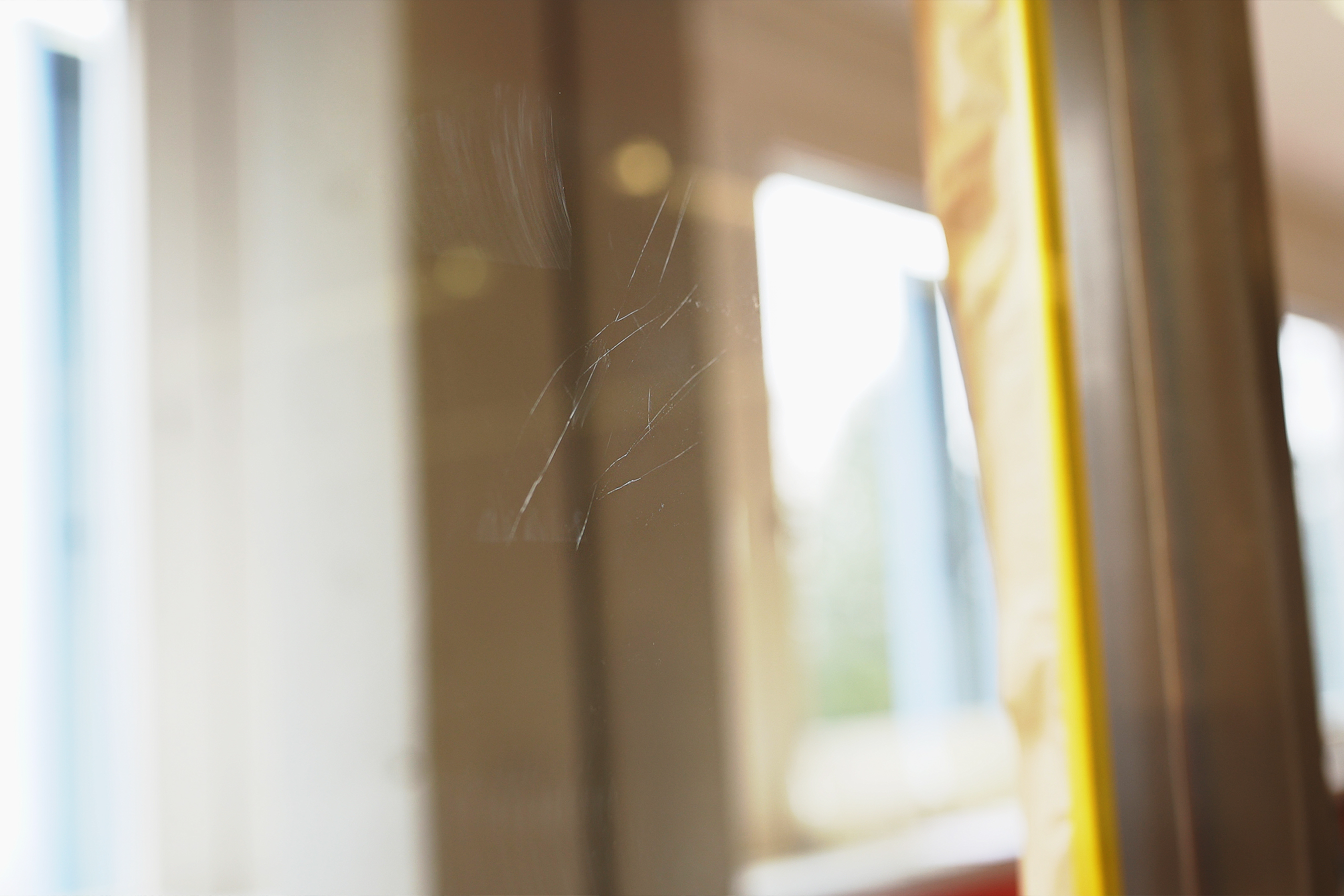
Glass Scratches Are the Rule, Not the Exception
Experience from new construction projects and industry sources paints a clear picture: between 50% and 100% of a project’s glass surfaces are affected by scratches to varying degrees by the end.
A large portion of these damages occurs in the final weeks of construction. Cleaning teams work under time pressure, often without specialized training for glass surfaces and using tools that are not suitable for tempered or coated glass.
According to assessments by restoration companies like GLASSRESQ, over 90% of these scratches can be completely eliminated through professional glass restoration—without removing the panes, without lead times, and without loss of quality.
Why December Is the Most Risky Month for Glass Defects
Many projects must be completed by the end of the year for accounting reasons. At the same time, investors and owners expect occupancy, rental, or sale by the deadline.
Conditions on site are challenging: daylight is limited, personnel resources are fully occupied, and schedules are tight. Cleaning is often carried out at the last minute and assigned to low-cost providers who work quickly without clear instructions.
The result: streaks, wipe marks, superficial scratches, or deep grinding marks. For project managers, this creates a decision-making conflict: either accept the defects and risk future disputes, or postpone acceptance, which entails additional costs and delays.
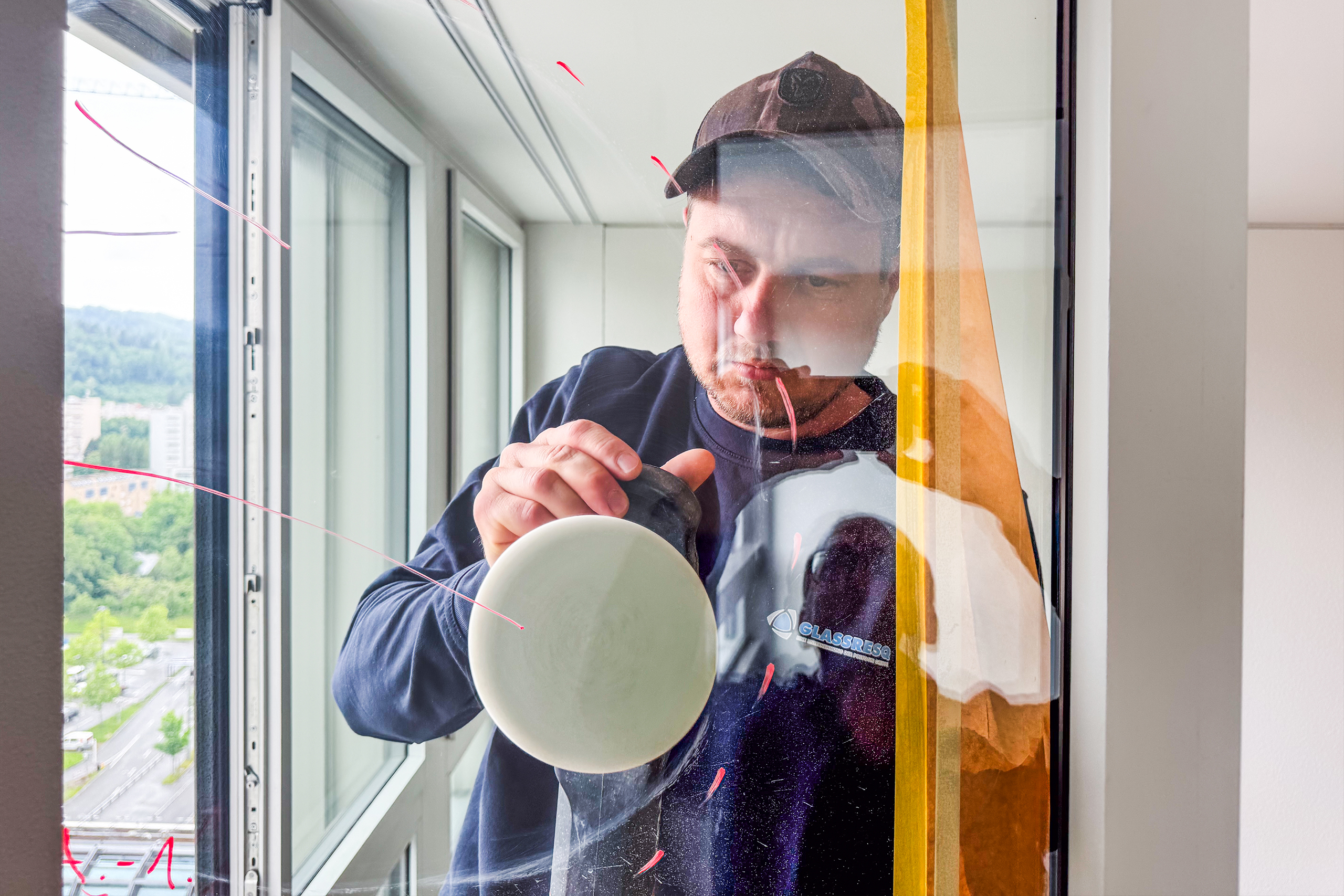
SmartRepair as an Alternative to Glass Replacement
SmartRepair is an established method for restoring glass surfaces. Instead of replacing the entire pane, scratches are locally removed using specialized machines and trained personnel.
The process is based on precise material removal in the area of the damage. The surface is then polished and visually matched to its surroundings. This is done on-site, without removing the glass, without lead times, and without affecting adjacent components.
The costs are significantly lower than a full replacement. Depending on the extent of the damage, SmartRepair costs between CHF 400 and CHF 1,500 per pane, while a complete glass replacement can quickly amount to CHF 1,800–3,500 per element.
Additional advantages include fast response times, minimal intervention in existing structures, and elimination of risks such as color or texture discrepancies with new glass.
Legal Basis According to SIA Standard 118
SIA Standard 118 regulates the process of construction acceptance and defect reporting. A key aspect is the 30-day period following notification of project completion. If no joint acceptance occurs, the work is considered tacitly accepted.
From that point, the two-year complaint period for obvious defects begins. For hidden defects, an extended period of three additional years applies, although proving them becomes more challenging.
In practice, this means that scratches on glass surfaces must be documented at the time of acceptance and ideally corrected beforehand. If overlooked, the issue moves into the complaint phase, causing additional effort through expert reports, legal clarifications, and coordination with insurance companies.
Structured Implementation During the Project
GLASSRESQ follows a clear workflow model for construction sites in the final phase.
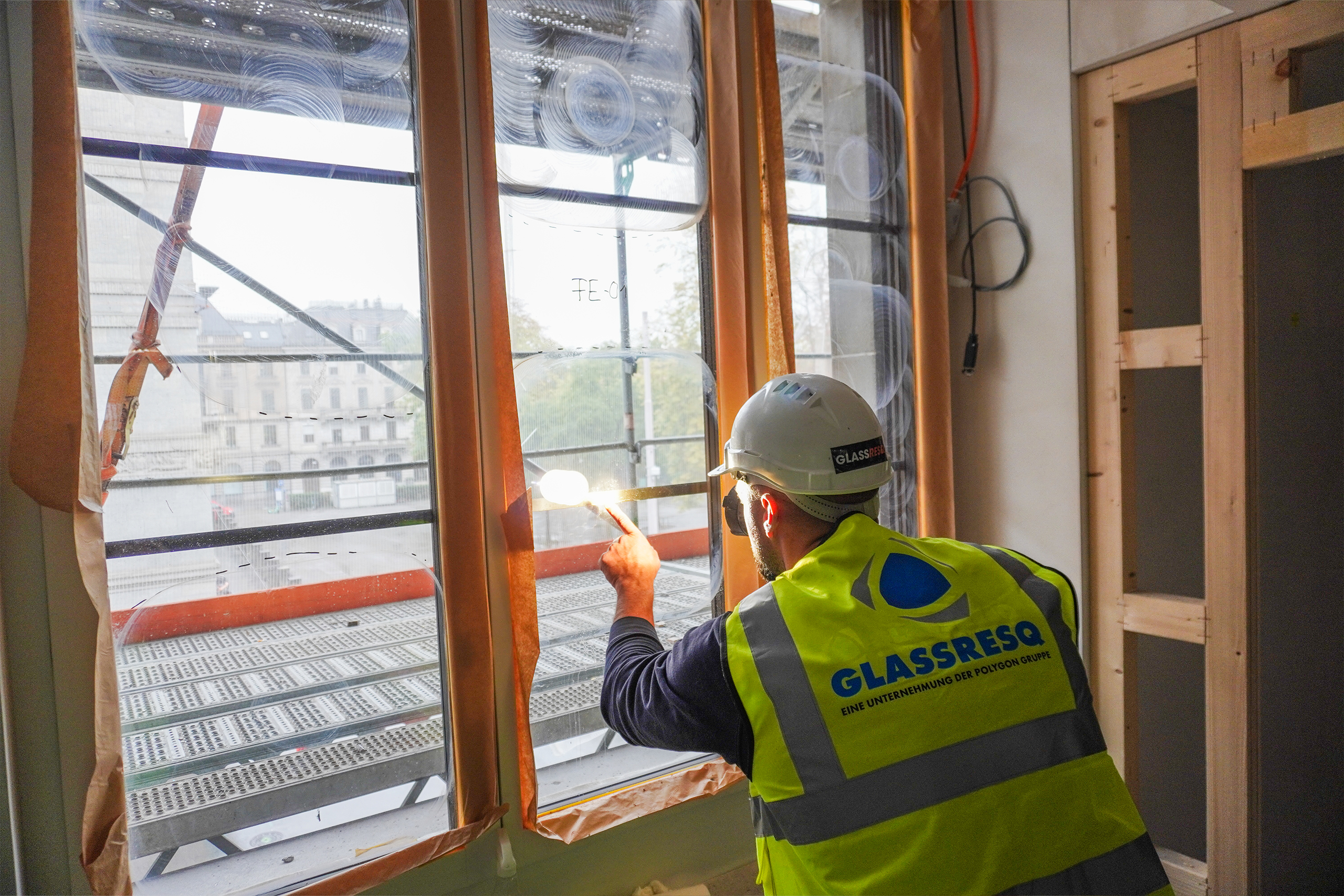
The first step is a visual inspection after the initial cleaning. All affected surfaces are identified and documented. In the second step, technical experts assess which damages can be repaired and the expected scope of work.
Restoration work is consolidated to optimize access logistics, scaffolding times, and handovers between phases. After completion, quality assurance is performed with a protocol and photo documentation.
This process is particularly efficient for general contractors because it eliminates the need to coordinate multiple small providers. All services are delivered by a single operator, with clear responsibilities and traceable results.
Benefits for Clients, Investors, and General Contractors
The targeted use of SmartRepair during project completion offers measurable advantages.
Clients benefit from flawless glass surfaces at handover, avoiding disputes with buyers or tenants. General contractors reduce defects at acceptance, save costs, and ensure the project schedule is maintained.
Investors receive a technically flawless project without risks from replacement delays or quality deviations.
Additional benefits include a better CO₂ footprint. Replacing large glass surfaces is resource-intensive, whereas SmartRepair avoids material use, transportation, and disposal.
The predictability of effort and costs makes SmartRepair a reliable tool for professional project completion.
Conclusion
Glass scratches at project handover represent a systematic risk, especially in December. Ignoring them can result in change orders, schedule delays, and legal disputes.
SmartRepair is an economically and technically convincing solution that precisely eliminates damages, stabilizes projects, and builds trust.
GLASSRESQ supports general contractors, site managers, and clients in efficiently and sustainably resolving glass defects. This way, glass surfaces do not become a weak point of the project but a visible testament to care and quality.
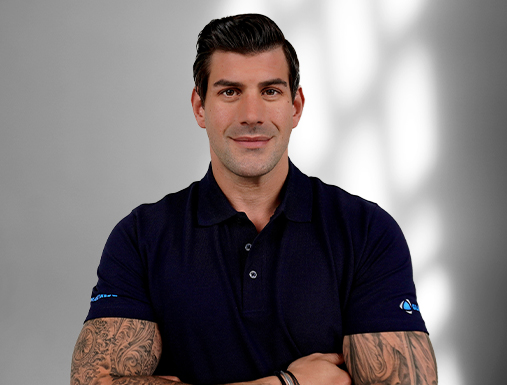
Dominic Duer
CEO
GLASSRESQ AG – Specialist Company for Professional Glass Restoration in Switzerland